




 login
login








MAHLE on the Future of Electrification: Thermal Management, Range Extenders, and the Next Generation of Batteries
-

-
 IAA Transportation 2026
MAHLE GmbH
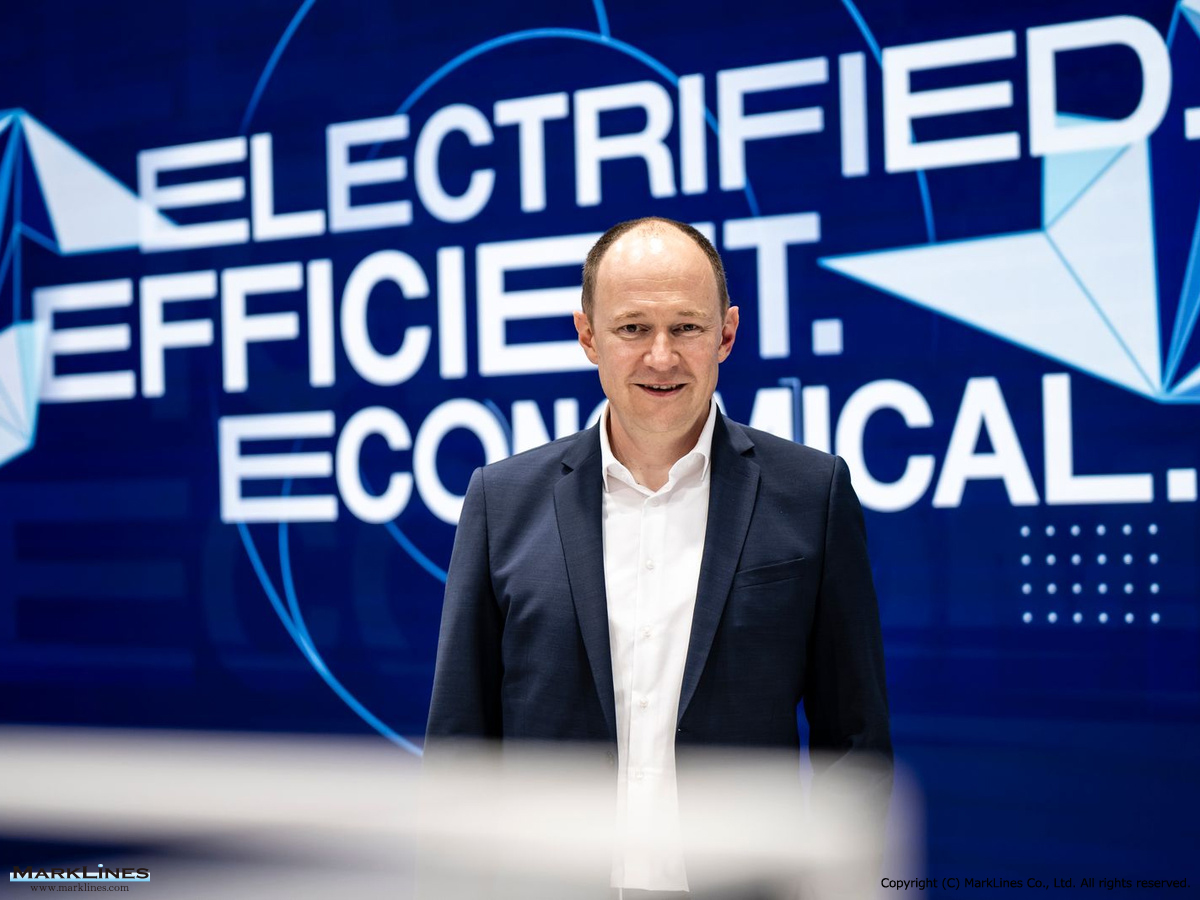
Dr. Marco Warth, Vice President Corporate Research and Advanced Engineering
About This Interview
The electrification of commercial transportation presents manufacturers and suppliers with new technical challenges. Higher battery capacities, megawatt charging systems, increasing demands for range and uptime, and emerging battery technologies are fundamentally changing the requirements for vehicle architecture, thermal management, and system integration.
At IAA Transportation, MarkLines spoke with Dr. Marco Warth, Vice President Corporate Research and Advanced Engineering at MAHLE, about the limitations of today’s battery systems, the role of thermal management in megawatt charging, the potential of range extender concepts, and the challenges involved in the industrialization of solid-state batteries. The interview also explored the future importance of system integration, electrification, and intelligent energy management for maintaining the competitiveness of commercial vehicles.
This exclusive interview is for paid members only.
If you register as a free member, you can read the rest of this article for a limited time.
In addition, you can also enjoy the following content for free:


Question List
-
About This Interview
-
Q1Dr. Warth, when it comes to battery-electric long-haul trucks, we are now talking about batteries with capacities of several hundred kilowatt-hours and megawatt charging capability. As a result, the thermal loads generated during charging and discharging are increasing dramatically. Where do you see the physical limits of today’s liquid-cooling technologies, and what new cooling concepts does MAHLE consider necessary to enable ultra-fast charging in the future without compromising battery life, safety, or economic viability?
-
Q2MAHLE unveiled its new range extender system for battery electric trucks at the Media Tech Day and is now presenting it to a broader industry audience for the first time at the IAA Transportation. The concept promises ranges of more than 800 kilometers while significantly reducing battery capacity. Where does MAHLE see the primary technical challenge in such a system? Is it the efficiency of the generator, thermal management, the operating strategy between the battery and the range extender, or integration into existing electric truck platforms?
-
Q3MAHLE is already working with ProLogium on thermal management solutions for solid-state batteries. In public discussions, the focus is usually on cell chemistry. Far less attention is paid to the challenges of system integration at the vehicle and battery-pack level. Where do you see the key barriers to market adoption today: in the further development of the cell itself, or in managing temperature, pressure, aging, and service life at the battery-pack level?
-
Q4MAHLE pursues a comprehensive systems approach to electrification, spanning thermal management and battery development as well as electronics, software, and electric drive systems. Looking ahead over the next decade, where does MAHLE see the greatest value being created? In individual key technologies and components, or in the ability to intelligently connect, control, and optimize the overall system? Put differently, will the competitiveness of future commercial vehicles be determined more by the quality of individual hardware components or by system integration and the interaction of all subsystems?
-
Editor’s Note
News Related to MAHLE GmbH
-
Mahle, India opens E-Compressor production facility in Coimbatore
-
MAHLE starts series production of battery cooling plates at Montblanc plant in Spain
-
Mahle collaborating for range extenders with European commercial vehicle manufacturer
-
IAA Transportation 2026: MAHLE to present range extender system for heavy electric trucks
 Japan
Japan +81-3-4241-3907

 USA
USA Mexico
 Germany
 China (Shanghai)
 Thailand
 India
India
 free for 1 week
 Online Demo