





 login








Texas Instruments: China’s Automotive E/E Architectures Accelerate toward Centralization as Suppliers Shift toward System-level Collaboration
-

-
 Exclusive Interview
Texas Instruments
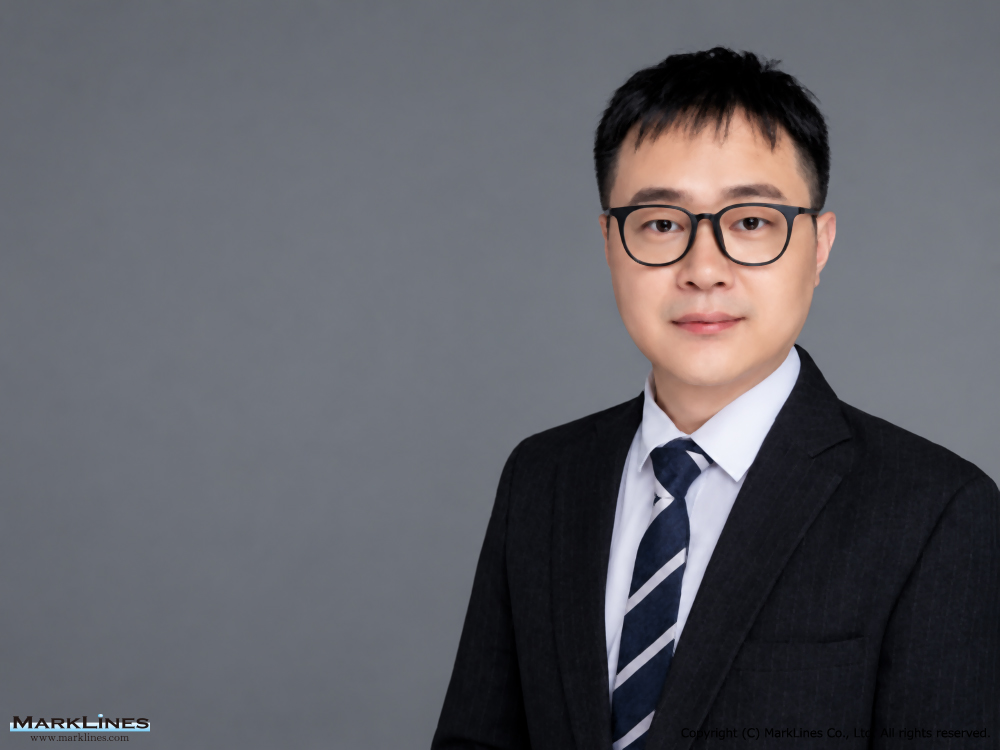
Mr. Xiangyuan Zhao, Director of Technical Support for Texas Instruments (TI) China.
About This Interview
China's automotive industry is undergoing multiple transformations driven by electrification, intelligent technologies, and the evolution of electrical/electronic (E/E) architectures. Against this backdrop, how semiconductor suppliers interpret changes in the Chinese market and adjust their positioning has become an important lens through which to examine the evolution of the automotive value chain.
To discuss the development of China’s automotive industry over the next three to five years, the evolving role of suppliers, and the challenges of doing business in China, MarkLines interviewed Xiangyuan ZHAO, Director of Technical Support for Texas Instruments (TI) China. Mr. Zhao is responsible for application engineering support for TI’s analog and embedded processing products across China and has nearly 20 years of experience in the semiconductor industry. This report presents six representative Q&As selected from the full interview, covering technical areas including battery management, high-voltage electric drive systems, software-defined vehicles (SDVs), and millimeter-wave radars.
This exclusive interview is for paid members only.
If you register as a free member, you can read the rest of this article for a limited time.
In addition, you can also enjoy the following content for free:


Question List
-
About This Interview
-
Q1What major changes have taken place in China’s automotive industry in recent years, and how do you expect the industry to develop over the next three to five years? In response to these changes, what kind of supplier does TI aim to become in China, and what specific measures will it take to achieve this?
-
Q2What are the main challenges TI currently faces in its automotive business in China? Compared with domestic and international peers, what differentiates TI, and which areas will it focus on developing in the future?
-
Q3How do you view the trend in battery management from “monitoring” toward “predictive and proactive management”?
-
Q4As high-voltage platforms and high-power electric drive systems continue to develop, what new requirements are automakers placing on traction inverters?
-
Q5SDVs and centralized computing architectures are reshaping vehicle E/E architectures. For TI, how will this shift affect the value of traditional analog, power management, interface, sensor, and real-time control chips?
-
Q6Intelligent driving in China is expanding from a premium feature to broader market adoption. In your view, will the future role of millimeter-wave radar in intelligent driving be focused more on safety redundancy, cost optimization, or all-weather perception?
-
Editor’s Note
 Japan
 +81-3-4241-3907

 USA
 Mexico
 Germany
 China (Shanghai)
 Thailand
 India

 free for 1 week
 Online Demo