




 login
login








What lies beyond the Mini-EV “Racco”: BYD’s Japan strategy and next moves
-

-
 Exclusive Interview
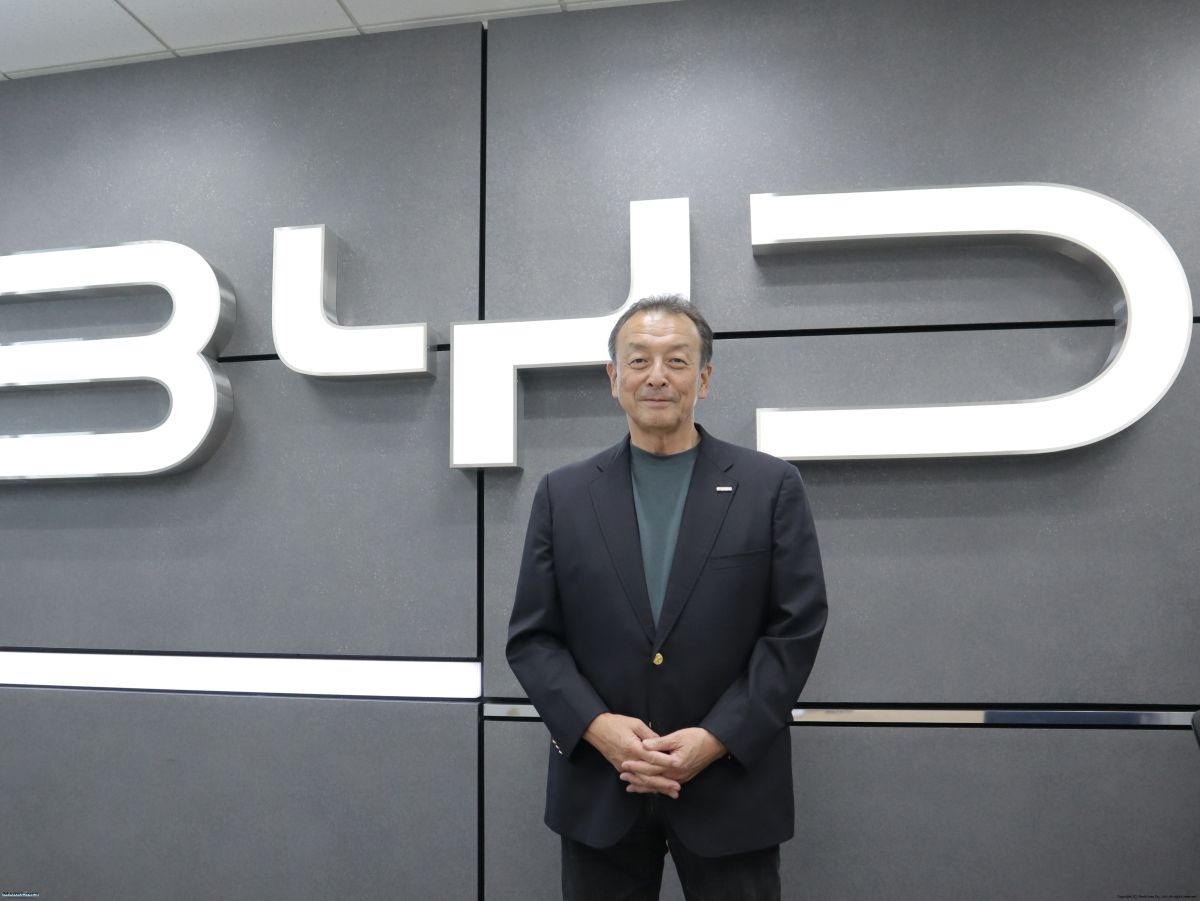
BYD Auto Japan Co., Ltd. (BAJ)
President Atsuki Tofukuji
About This Interview
BYD Company Limited (BYD) sold more than 4.6 million vehicles worldwide in 2025, making it the world’s sixth-largest automaker. Of these global sales, battery electric (EV) passenger vehicles accounted for approximately 2.26 million units, putting BYD ahead of Tesla, Inc. (Tesla) to become the world’s No. 1 EV manufacturer. BYD is expanding sales not only in China but also in countries around the world, particularly in Western Europe, ASEAN, Mexico and South America. However, the company has struggled in Japan since entering the market in 2023.
Against this backdrop, on July 28, 2026, BYD launched the independently developed kei (mini) EV tall wagon “Racco” for the Japanese market, becoming the first foreign automaker to enter Japan’s kei car market. There is considerable interest in how BYD will attack Japan’s “fortress” kei car market. The challenge can be regarded as an important test of BYD’s Japan strategy. On August 7, 2026, shortly after the launch of the Racco, MarkLines interviewed Mr. Atsuki Tofukuji, President of BYD Auto Japan. We asked him what kind of future the company envisions starting with the Racco, including the significance of entering Japan’s kei EV market, the background and objectives of the Racco’s development, its target customers and regional strategy, and plans for expanding the sales network.
This exclusive interview is for paid members only.
If you register as a free member, you can read the rest of this article for a limited time.
In addition, you can also enjoy the following content for free:


Question List
-
About This Interview
-
Q1There were reports that orders for the kei EV “Racco” exceeded 700 units within several days of its launch. How do you assess this initial response? Please tell us about any reactions that exceeded expectations, as well as any issues you have identified.
-
Q2You have set a target of 10,000 orders by the end of 2026. From the perspectives of profitability and the sales structure, what significance do you attach to reaching this milestone?
-
Q3What is the significance of introducing the Racco into Japan’s kei car market, which is unique from a global perspective?
-
Q4How will you apply the knowledge gained from the Japanese market globally in the future? There were recent reports that Suzuki Motor Corporation (Suzuki) plans to introduce a kei EV in Europe. Does your company have any such plans?
-
Q5What difficulties did you encounter when entering Japan’s kei car market? How were you able to complete development in the extremely short period of approximately two and a half years?
-
Q6BYD’s vertically integrated business model is one of its strengths. To what extent are the components used in the Racco shared with other models? Is there a possibility of partnering with Japanese suppliers in the future?
-
Q7At which production facility in China is the Racco manufactured?
-
Q8What type of users is the Racco intended for, and what value does it offer them? What regions of Japan do you see as promising markets?
-
Q9Including the CEV (Clean Energy Vehicle) subsidy, the price of the Racco’s entry grade is below JPY 2 million, and the higher grades offer a high level of equipment compared with competing vehicles while keeping the price down. What was your thinking behind the pricing? Please tell us about the product strategy supporting the pricing.
-
Q10Starting with the Racco, what kind of business development do you envision going forward? Please tell us about the possibility of supplying the kei EV platform to other companies and expanding into commercial vehicles and fleets for corporate customers.
-
Q11Going forward, what policy will you adopt for nationwide expansion of the sales network, including standard dealerships and satellite dealerships? How do you plan to expand charging infrastructure?
-
Editor’s Note
 Japan
Japan +81-3-4241-3907

 USA
USA Mexico
 Germany
 China (Shanghai)
 Thailand
 India
India
 free for 1 week
 Online Demo