




 login








How AI Is Reshaping Mobility: Neusoft's Perspective on the Scenario-Defined Future
-

-
 Exclusive Interview
Neusoft Corporation
Dr. Angela Wang
Senior Vice President & Secretary of the Board of Directors

About This Interview
Artificial intelligence is rapidly reshaping the automotive industry, influencing vehicle development, software engineering, automated driving, and the in-vehicle user experience.
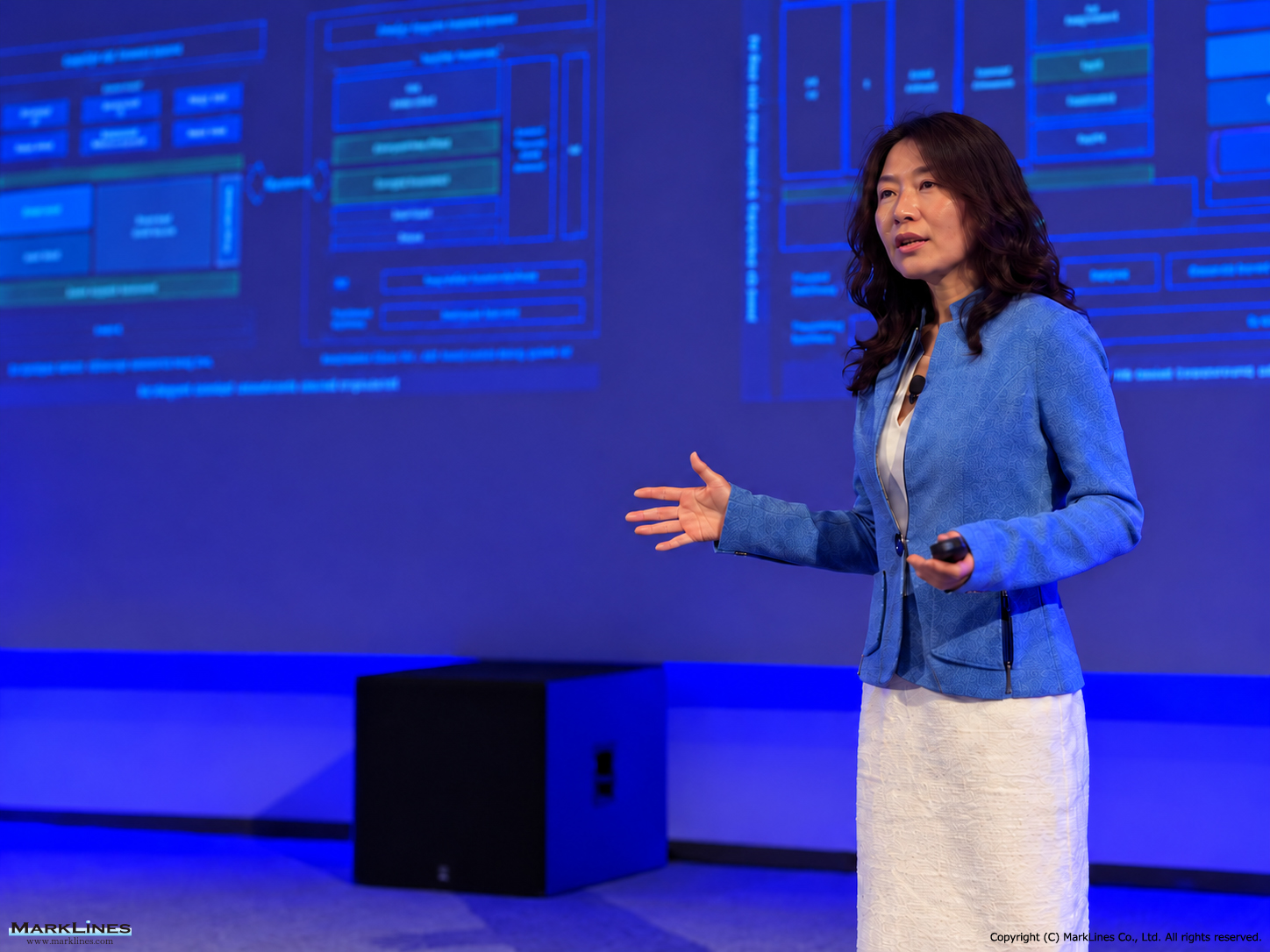
At ELIV 2026 in Baden-Baden, MarkLines spoke with Dr. Angela Wang, Senior Vice President & Secretary of the Board of Directors of Neusoft Corporation, following her presentation, "The Great Leap Forward: Inspirations from China's 'Scenario-Defined' Path to Rapid AI Implementation in Mobility."
During the interview, Dr. Wang discussed how artificial intelligence is evolving from a standalone technology into an increasingly important component of the automotive ecosystem. Topics included AI-powered cockpits, advanced automated driving capabilities, AI-enabled software development and testing, regional differences in AI adoption, and the role of international collaboration in accelerating innovation.
Drawing on her experience in China, Europe, and North America, Dr. Wang shared her perspective on how artificial intelligence is transforming both the vehicles that automakers bring to market and the technical processes used to develop them.
This exclusive interview is for paid members only.
If you register as a free member, you can read the rest of this article for a limited time.
In addition, you can also enjoy the following content for free:


Question List
-
About This Interview
-
Q1Your presentation highlights China's 'Scenario-Defined' approach to AI implementation in mobility. How does this approach differ from traditional technology-driven development models, and what conditions within the Chinese market have enabled AI-powered mobility solutions to scale so rapidly?
-
Q2As AI becomes increasingly integrated into vehicles, which applications do you believe will create the greatest value for consumers and the automotive industry? How will technologies such as AI-powered cockpits, intelligent assistants, and advanced automated driving systems reshape the user experience and future competitiveness?
-
Q3In your presentation, you describe the transition from human-defined software engineering to AI-generated development and emphasize the growing role of AI throughout the development lifecycle. How is AI transforming the way automotive software is designed, tested, validated, and maintained, and what impact could this have on development speed, quality, and efficiency across the industry?
-
Q4Based on your past experience leading automotive activities across China, Europe, and North America, what differences do you observe in consumer attitudes toward AI-powered mobility? How have these differences influenced the pace of innovation and deployment across regions?
-
Q5Your presentation describes a future in which vehicles increasingly adapt to human needs rather than requiring users to adapt to the vehicle. How do you expect AI to transform the relationship between drivers and vehicles over the next five years, and what role will AI-powered communication and orchestration of vehicle functions play in creating a more intuitive user experience?
-
Q6Looking ahead, how do you see collaboration between China, Europe, and North America shaping the next generation of AI-enabled mobility, and what role can companies such as Neusoft play in bridging these different innovation ecosystems?
-
Editor's Note
 Japan
 +81-3-4241-3907

 USA
 Mexico
 Germany
 China (Shanghai)
 Thailand
 India

 free for 1 week
 Online Demo