




 login








Drive System Design on Engineering Future Combustion, Hybrid and Software-Defined Powertrains
-

-
 Aachen Colloquium 2026
Drive System Design
Steve Hunton, Managing Director - DSD Powertrain
Andy Green, Chief Engineer - ICE Programs
Table of Contents
-
 What Role Will Combustion Engines Play in the Future Mobility Landscape?
-
How Can OEMs Extend the Value of Existing Engine Platforms?
-
What Role Will Alternative Fuels and Range Extenders Play?
-
How Are Software and Vehicle Architectures Changing Powertrain Development?
-
How Do You View the Future of the Global Automotive Industry?
About This Interview
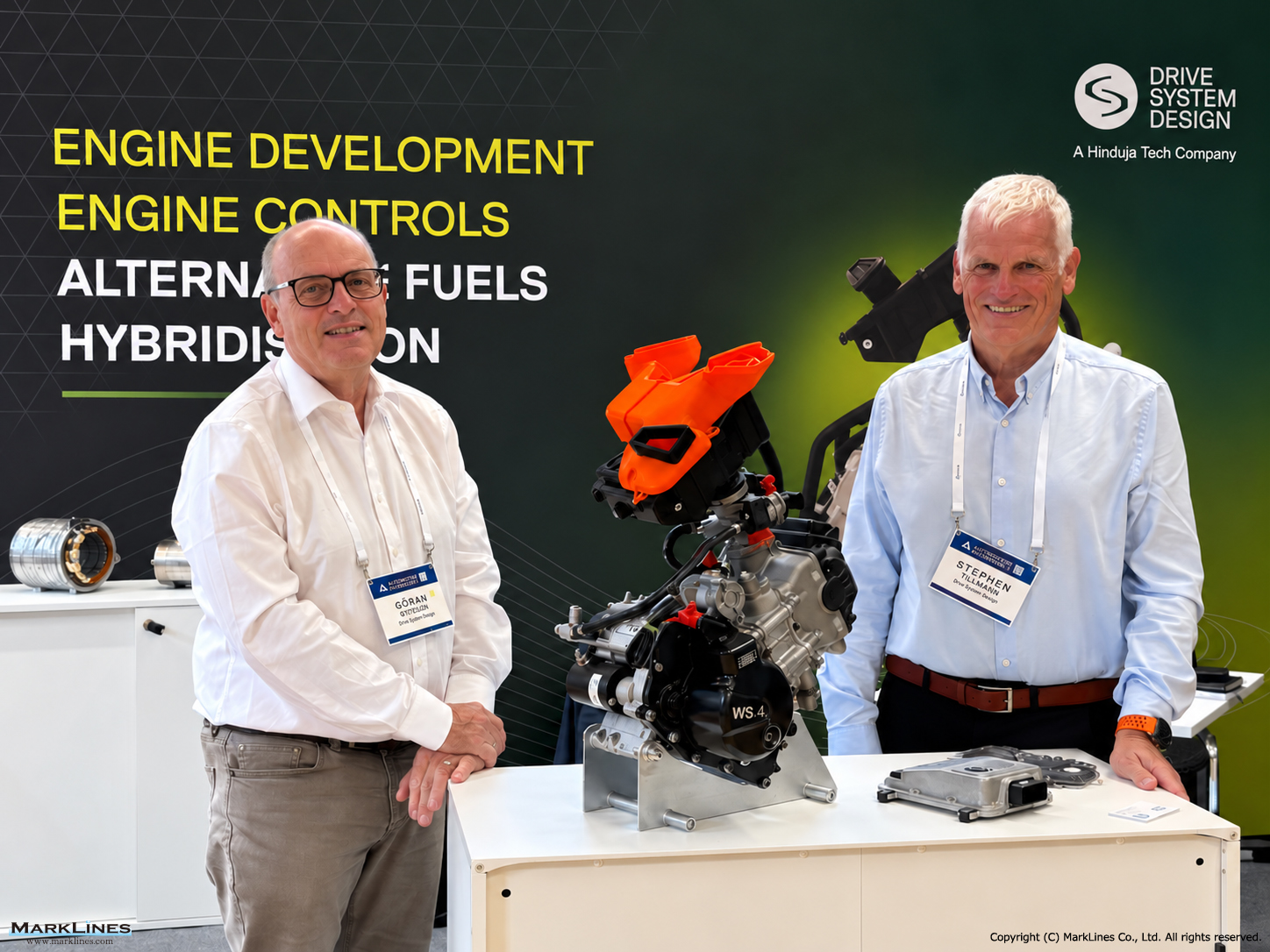
While much of the automotive industry has focused on electrification in recent years, significant opportunities remain for combustion engines, particularly in commercial vehicles, marine applications and off-highway equipment. At the Aachen Automotive Colloquium, MarkLines spoke with Steve Hunton (right), Managing Director - DSD Powertrain, and Andy Green (left), Chief Engineer - ICE Programs, about the future role of combustion engines, alternative fuels, range extenders and software-defined vehicle architectures.
At the beginning of the interview, Hunton outlined Drive System Design's evolution from a transmission-focused engineering consultancy into a full powertrain engineering services provider.
Throughout the discussion, Hunton emphasized that the future of mobility is unlikely to be dominated by a single propulsion technology. Instead, he expects batteries, combustion engines, hybrid systems and alternative fuels to coexist, with each technology serving specific applications, operating environments and customer requirements. Green, meanwhile, highlighted the growing role of software, simulation and centralized vehicle architectures in shaping the next generation of powertrain development.
This exclusive interview is for paid members only.
If you register as a free member, you can read the rest of this article for a limited time.
In addition, you can also enjoy the following content for free:


Question List
-
About This Interview
-
Q1The automotive industry has spent much of the past decade focusing on battery-electric vehicles, yet hybrid systems, range extenders and alternative fuels are receiving renewed attention. How do you see the role of the internal combustion engine evolving over the next decade, and which applications will continue to offer the greatest opportunities for ICE technology?
-
Q2Many manufacturers are under pressure to decarbonize while also maximizing returns on existing powertrain investments. What strategies do you see OEMs pursuing to keep established engine platforms relevant in the years ahead?
-
Q3As the industry explores multiple pathways toward lower-emission mobility, alternative fuels and range-extender concepts are attracting growing attention. Which technologies do you consider most promising, and how do you see their role evolving across passenger vehicles, commercial vehicles and other transportation sectors?
-
Q4Vehicle architectures are undergoing significant change as manufacturers integrate electrified powertrains, connected services and increasingly complex electronic systems. How is this shift affecting powertrain development, and what technologies do you believe will shape the next generation of vehicles?
-
Q5The transition toward electrification is progressing at different speeds around the world, influenced by regional regulations, customer preferences and industrial capabilities. How do you see the global automotive industry evolving over the next two to three decades, and what role will combustion engines continue to play within that landscape?
-
Editor's Note
 Japan
 +81-3-4241-3907

 USA
 Mexico
 Germany
 China (Shanghai)
 Thailand
 India

 free for 1 week
 Online Demo