




 login
login








Desay SV: Deepening Collaboration with Japanese OEMs through "Global Support, Local Delivery" Model
-

-
 Exclusive Interview
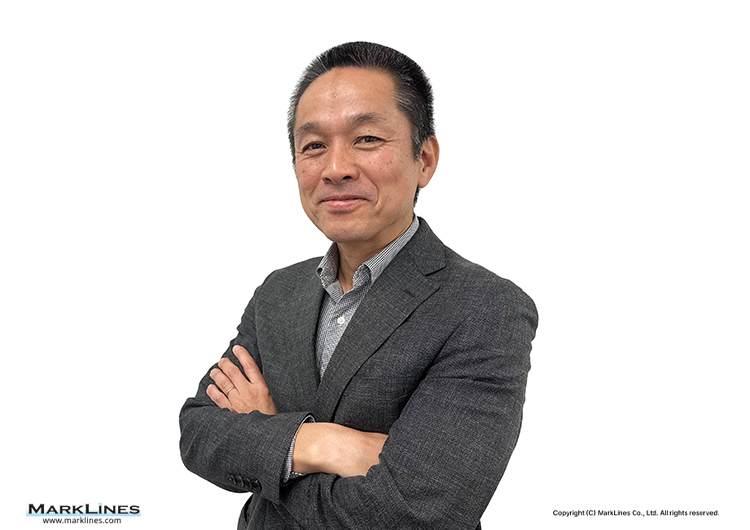
Desay SV Automotive Japan
President Mr. Kosuke Kawasaki
About This Interview
As a major supplier in the fields of smart cockpits and intelligent driving in China, Desay SV has been accelerating its expansion into overseas markets in recent years. The Japanese market has long been regarded as one of the key proving grounds for the globalization of Chinese automotive electronics suppliers due to its complex development processes, strict quality requirements, and long-term cooperation cycles.
Recently, MarkLines conducted an exclusive interview with Mr. Kosuke Kawasaki, President of Desay SV Automotive Japan Co., Ltd. (Desay SV Automotive Japan). The discussion covered the company’s strategy for the Japanese market, its global collaboration framework, the evolution of automotive electrical/electronic (E/E) architecture, and the application of large AI models in automotive systems.
Table of Contents
-
About This Interview
-
Q1Please briefly introduce the history of Desay SV and its major turning points.
-
Q2What does Desay SV consider to be the critical factors when collaborating with Japanese OEMs?
-
Q3Q3: How does Desay SV connect the requirements of Japanese customers with its global R&D and manufacturing capabilities?
-
Q4Currently, automotive E/E architecture is evolving from a distributed type toward a centralized type. What changes does Desay SV believe this will bring to the industry value chain?
-
Q5What will be the key value of integrating smart cockpits, ADAS, and AI services in the future?
-
Q6How does Desay SV view the current development phase of large AI models in the automotive industry?
-
Editor’s Note
This exclusive interview is for paid members only.
If you register as a free member, you can read the rest of this article for a limited time.
In addition, you can also enjoy the following content for free:


Table of Contents
-
About This Interview
-
Q1Please briefly introduce the history of Desay SV and its major turning points.
-
Q2What does Desay SV consider to be the critical factors when collaborating with Japanese OEMs?
-
Q3Q3: How does Desay SV connect the requirements of Japanese customers with its global R&D and manufacturing capabilities?
-
Q4Currently, automotive E/E architecture is evolving from a distributed type toward a centralized type. What changes does Desay SV believe this will bring to the industry value chain?
-
Q5What will be the key value of integrating smart cockpits, ADAS, and AI services in the future?
-
Q6How does Desay SV view the current development phase of large AI models in the automotive industry?
-
Editor’s Note
 Japan
Japan +81-3-4241-3907

 USA
USA Mexico
 Germany
 China (Shanghai)
 Thailand
 India
India
 Free Trial
 Online Demo